
FLEXIBLE. PRECISE. AFFORDABLE

Impedance Analyzers

Sciospec stands for Electrical Impedance at its Best. Electrical Impedance Spectroscopy has been our core technology ever since. In the past years we have developed a scalable and flexible technology plaform that allows for precise, customizable, yet cost-effective lab-bench impedance analyzers. Choose between our three standard instruments, add some powerful options and enjoy an impedance analyzer that perfectly fits for your application.

Learn more

Who we are working with and for

Latest Products

Available options

  • Frontpanel connectors: BNC, SMA, MCX, DSUB, custom
  • Internal multiplexer options for sequential multichannel capabilities
  • 32 x 2-point measurement
  • 16 x 4-point measurement
  • IOport digital interface connector for external sensors and other hardware
  • Wireless interfaces
  • Medical grade modifications
  • Power supply
  • Enclosure modification
  • Isolated USB-Port
  • AC coupling frontend
  • Temperature controller module
  • Precision multichannel temperature monitoring module for most common temperature sensor types
  • Customized current and voltage ranges
    2nd channel (default for ISX-3 mini / optional for ISX-3)
  • Battery operation
  • And many more

Impedance Analyzers - Chip Adapters and Multiplexers

MEArack - Adapter for Multielectrode Arrays

  • adapter for multi-electrode-arrays (MEAs) and other sensors-/biochips
  • 64-channel analog multiplexer
  • 60 spring-loaded gold electrode contacts
  • layout fitting broad range of different alredy available chips
  • optional custom chip development
  • small form factor, low profile
  • bottom and top windows for use in combination with microscopic and other optical equipment
  • easy setup through extension port
  • fully integrated graphical user-interface in Sciospec software

ECISadapter - measurement speed and resolution boost for your ECIS experiements

  • adapter for ECIS 8 well arrays fitting the extension port system (e.g. on ISX-3)
  • 8 channels each in two wire configuration (8 work electrodes W and 1 common counter electrode)
  • layout fitting broad range of ECIS 8 well arrays
  • small form factor, low profile
  • incubator-proven
  • glass bottom for use in combination with microscopic and other optical equipment
  • easy setup through extension port
  • fully integrated graphical user-interface in Sciospec software

SlideChipAdapter - 50 port MUX - safe, flexible, easy

  • 50 port 2/3/4 point multiplexer for Sciospec Impedance Analyzers (e.g. ISX-3)
  • very robust, low parasitic slide connector for edge card style contacts
  • small form factor, low profile, incubator-proven
  • flexible options for your sensors
    • contacts on your sensor substrate or sensor carriers (e.g. pcb based)
    • cable adapters
    • get readily available carriers from us
    • build your own complete open design and supporting design files
    • have us do a design for you
  • easy setup through extension port
  • fully integrated graphical user-interface in Sciospec software

Still not the perfect fit for your application? Then let’s custom-tailor it for you!

Our modular plaform allows for cost-efficient customization while keeping the development risk low. So what will you need? An application specific multiplexing solution, a ready-to-go portable device for mobile health or a massive multichannel platform for a screening application? Just get in touch with us!

Relevant publications

Impedance Analyzer of Sciospec

Impedance analyzers are electronic test equipment used to measure complex electrical impedance as a function of test frequency. They are mainly used for Electrochemical Impedance Spectroscopy (EIS) to investigate the electrical resistance (measured in Ohm) of substances and objects.
The key specifications of an impedance analyzer include the frequency range, impedance range, absolute impedance accuracy and phase angle accuracy. The frequency range of an impedance analyzer can vary from 1 mHz to 100 MHz, while the impedance values can range over many decades from µΩ to TΩ. The phase angle accuracy is in the range of 10 millidegree.

The accuracy of impedance measurement with an impedance analyzer is typically highly accurate, e.g. with a basic accuracy of up to 0.05%. A Impedance Analyzer has a frequency range of 20 Hz to 120 MHz and provides an industry best 0.045% (typical) basic accuracy over a wide impedance range, with a 40 V built-in DC bias source. In addition to the frequency range and accuracy, other specifications of an impedance analyzer include the ability to apply voltage bias and current bias while measuring, and the measurement speed.

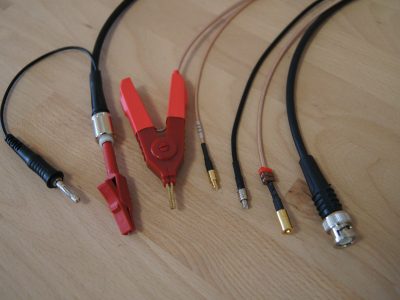
Accessories and test fixtures are also available to ensure highly accurate measurements without degrading the performance of the measurement instrument.

Impedanzanalysatoren

Understanding the Use and Applications of an Impedance Analyzer

Indeed, the wide array of systems that can be tested using an impedance analyzer is quite impressive. From automotive components to network components, only a few products or parameters can be immune to the capabilities of these sophisticated testing systems. Incredibly, some of these analyzers like LCR meters and Zurich instruments come with built-in software controlled features that optimize their performance.

The important thing to understand about the use of impedance analyzers is their optimization. For instance, in high-frequency testing, the 1MHz frequency range is often preferred. Nevertheless, some other anaylzers can operate outside this range, and can still deliver high accuracy in electrical measurements. This capability is essential in various applications, especially in power systems and electronics among others.

Impedance analysis itself, enabled by such analyzers, is a fundamental procedure in various fields. In essence, it’s used to ascertain the potential impedance of different types of systems. Typically, you’ll compare the characteristics of the systems under scrutiny with the parameters provided by the analyzer for your reference. Achieving such precision in testing procedures, however, hinges on various factors. These factors include the mode of operation of the analyzer, as well as its frequency range and other relevant factors.

It’s also important to note that while English is a common language for most analyzers, multilingual support is often offered to enable a broader usage across different regions. Additional resources and support like user manuals, troubleshooting guides, and regular software updates are provided by Sciospec to enhance your user experience and promote accurate impedance measurements. Apart from that, you can also avail of their unmatched customer support and technical services if you happen to encounter some technical hitches on their products. For unswerving accuracy in impedance analysis, you can always count on Sciospec impedance analyzers!

Furthermore, labone products present another class of analyzers whose performance and versatility are exceptional. Their characteristics allow diverse application, especially where high-accuracy impedance analysis is required. For power components testing, powerful impedance analyzers are used. We credit this to the robustness of their testing systems, and a comprehensive analysis that checks every little detail of the component in question. This can entail running several tests on the component to simply comparing its characteristics with the predefined components parameters on your analyzer. But ultimately, you can trust your Sciospec impedance analyzer to offer you accurate and reliable impedance measurements!

Accuracy in Measurements with an Impedance Analyzer

An impedance analyzer is a critical piece of equipment in many laboratories and industries. The use of an impedance analyzer provides detailed and accurate information about the electrical resistance or reactance of a system under test. It’s the key to accurate measurements, which is vital in many testing and measurement scenarios. The accuracy of an impedance analyzer primarily depends on factors such as frequency, input power, and the quality of the connection components.

An impedance analyzer improves accuracy by offering an overview of the entire impedance spectrum. This allows for a direct analysis of the system’s response to different frequency inputs. The measurement accuracy of an impedance analyzer stems from its precise algorithms and powerful analysis software. Furthermore, to ensure the accuracy of an impedance analyzer, regular system checks and impedance calibration are necessary. This calls for the services of a support team, which assists in maintaining the performance of the impedance analyzer.

In impedance measurements, the test object is subjected to a stimulus, usually a frequency sweep. The response of the test object is then measured at different frequencies. This information is useful in system analysis and debugging. The impedance analyzer records the magnitude and phase of the response, providing a detailed overview of the system under test. The software associated with the impedance analyzer processes the raw data to give meaningful and accurate results. The accuracy of these measurements can be verified using a known sample to compare with the actual test results.

Ensuring accuracy in impedance analyzer measurements is not just about having the right equipment; it’s also about implementing proper test methodologies. This includes the correct application of DC bias, the use of appropriate sample and test fixture, and the right setup of the test parameters in the impedance analyzer. Ignoring these aspects may result in inaccurate measurements, hence limiting the analyzer’s performance.

Most impedance analyzers come with LCR (Inductance, Capacitance, Resistance) measurement capabilities, which are easily accessible through the software. These products offer a wide frequency range and are designed to deliver unparalleled accuracy and repeatability. The use of cookies in the software helps to personalize your experience, offering suggestions and relevant information based on your past usage. The impedance analyzer also has inbuilt capabilities to handle complex components, including non-linear and temperature-dependent components.

Support services play a crucial role to ensure your impedance analyzer operates at peak performance consistently. They provide valuable information, assist with hardware and software issues, and offer necessary updates and upgrades. Regular system checks, careful handling and calibration, and power management further enhance the accuracy of measurements from an impedance analyzer. Moreover, clear and robust guidelines for making connections can also improve the test results.

In conclusion, an impedance analyzer is an essential tool offering valuable insights into the test system at hand. It makes complex measurements simple and accurate, spares the need for multiple test instruments, and provides a wide frequency range. By following the guidelines and utilizing the support services, one can ensure accurate results while using an impedance analyzer. Despite the complexities, with the right workflow and techniques, you can achieve remarkable accuracy in measurements with an impedance analyzer.

Still not the perfect fit for your application?
Then let’s custom-tailor it for you!

Our modular plaform allows for cost-efficient customization while keeping the development risk low. So what will you need? An application specific multiplexing solution, a ready-to-go portable device for mobile health or a massive multichannel platform for a screening application? Just get in touch with us!

Impedanzanalysatoren

Understanding the Use and Applications of an Impedance Analyzer

Indeed, the wide array of systems that can be tested using an impedance analyzer is quite impressive. From automotive components to network components, only a few products or parameters can be immune to the capabilities of these sophisticated testing systems. Incredibly, some of these analyzers like LCR meters and Zurich instruments come with built-in software controlled features that optimize their performance.

The important thing to understand about the use of impedance analyzers is their optimization. For instance, in high-frequency testing, the 1MHz frequency range is often preferred. Nevertheless, some other anaylzers can operate outside this range, and can still deliver high accuracy in electrical measurements. This capability is essential in various applications, especially in power systems and electronics among others.

Impedance analysis itself, enabled by such analyzers, is a fundamental procedure in various fields. In essence, it’s used to ascertain the potential impedance of different types of systems. Typically, you’ll compare the characteristics of the systems under scrutiny with the parameters provided by the analyzer for your reference. Achieving such precision in testing procedures, however, hinges on various factors. These factors include the mode of operation of the analyzer, as well as its frequency range and other relevant factors.

It’s also important to note that while English is a common language for most analyzers, multilingual support is often offered to enable a broader usage across different regions. Additional resources and support like user manuals, troubleshooting guides, and regular software updates are provided by Sciospec to enhance your user experience and promote accurate impedance measurements. Apart from that, you can also avail of their unmatched customer support and technical services if you happen to encounter some technical hitches on their products. For unswerving accuracy in impedance analysis, you can always count on Sciospec impedance analyzers!

Furthermore, labone products present another class of analyzers whose performance and versatility are exceptional. Their characteristics allow diverse application, especially where high-accuracy impedance analysis is required. For power components testing, powerful impedance analyzers are used. We credit this to the robustness of their testing systems, and a comprehensive analysis that checks every little detail of the component in question. This can entail running several tests on the component to simply comparing its characteristics with the predefined components parameters on your analyzer. But ultimately, you can trust your Sciospec impedance analyzer to offer you accurate and reliable impedance measurements!

Accuracy in Measurements with an Impedance Analyzer

An impedance analyzer is a critical piece of equipment in many laboratories and industries. The use of an impedance analyzer provides detailed and accurate information about the electrical resistance or reactance of a system under test. It’s the key to accurate measurements, which is vital in many testing and measurement scenarios. The accuracy of an impedance analyzer primarily depends on factors such as frequency, input power, and the quality of the connection components.

An impedance analyzer improves accuracy by offering an overview of the entire impedance spectrum. This allows for a direct analysis of the system’s response to different frequency inputs. The measurement accuracy of an impedance analyzer stems from its precise algorithms and powerful analysis software. Furthermore, to ensure the accuracy of an impedance analyzer, regular system checks and impedance calibration are necessary. This calls for the services of a support team, which assists in maintaining the performance of the impedance analyzer.

In impedance measurements, the test object is subjected to a stimulus, usually a frequency sweep. The response of the test object is then measured at different frequencies. This information is useful in system analysis and debugging. The impedance analyzer records the magnitude and phase of the response, providing a detailed overview of the system under test. The software associated with the impedance analyzer processes the raw data to give meaningful and accurate results. The accuracy of these measurements can be verified using a known sample to compare with the actual test results.

Ensuring accuracy in impedance analyzer measurements is not just about having the right equipment; it’s also about implementing proper test methodologies. This includes the correct application of DC bias, the use of appropriate sample and test fixture, and the right setup of the test parameters in the impedance analyzer. Ignoring these aspects may result in inaccurate measurements, hence limiting the analyzer’s performance.

Most impedance analyzers come with LCR (Inductance, Capacitance, Resistance) measurement capabilities, which are easily accessible through the software. These products offer a wide frequency range and are designed to deliver unparalleled accuracy and repeatability. The use of cookies in the software helps to personalize your experience, offering suggestions and relevant information based on your past usage. The impedance analyzer also has inbuilt capabilities to handle complex components, including non-linear and temperature-dependent components.

Support services play a crucial role to ensure your impedance analyzer operates at peak performance consistently. They provide valuable information, assist with hardware and software issues, and offer necessary updates and upgrades. Regular system checks, careful handling and calibration, and power management further enhance the accuracy of measurements from an impedance analyzer. Moreover, clear and robust guidelines for making connections can also improve the test results.

In conclusion, an impedance analyzer is an essential tool offering valuable insights into the test system at hand. It makes complex measurements simple and accurate, spares the need for multiple test instruments, and provides a wide frequency range. By following the guidelines and utilizing the support services, one can ensure accurate results while using an impedance analyzer. Despite the complexities, with the right workflow and techniques, you can achieve remarkable accuracy in measurements with an impedance analyzer.

Get in touch with us

+49 3425 88399 00

info@darkseagreen-cheetah-368964.hostingersite.com

Sciospec Scientific Instruments GmbH
Leipziger Str. 43b, 04828 Bennewitz, Germany

    Get in touch with us

    Search

    Get in touch with us