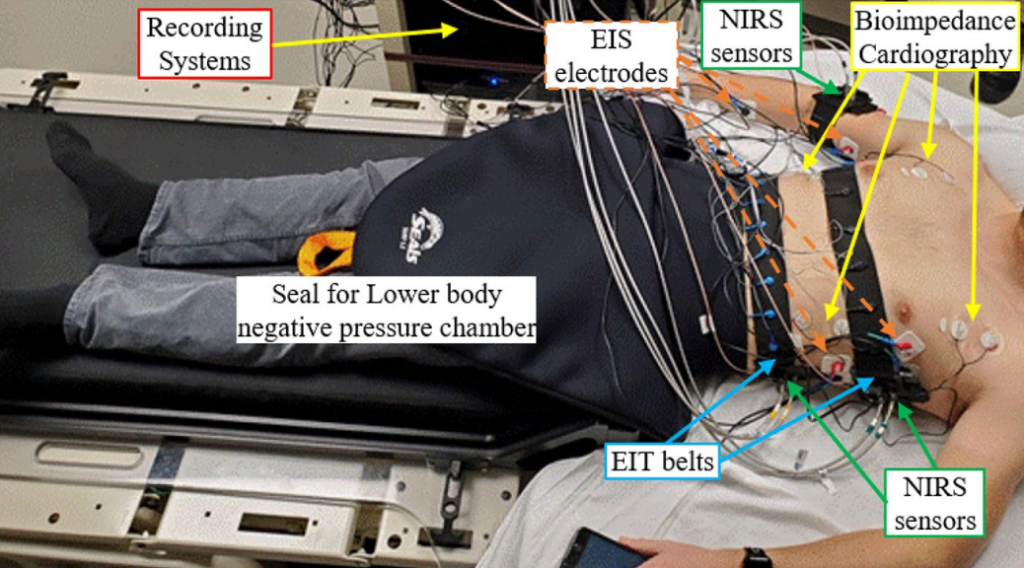
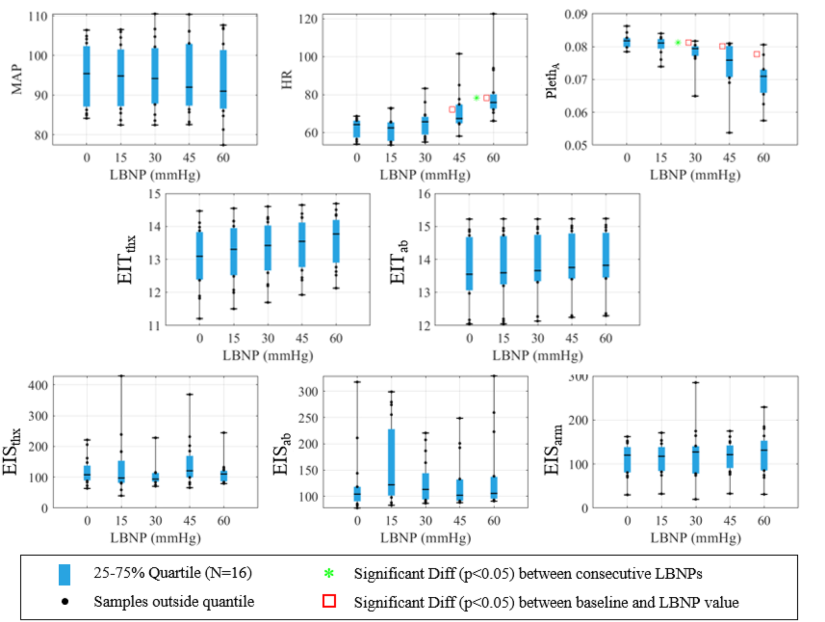
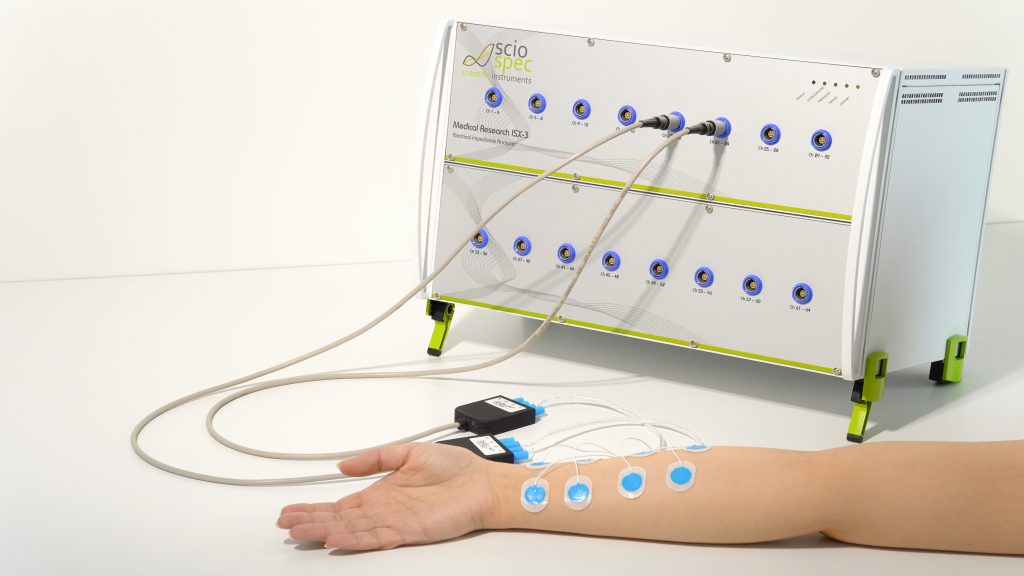
The recent publication, “Non-invasive biomarkers for detecting progression toward hypovolemic cardiovascular instability in a lower body negative pressure model” explores how advanced monitoring methods can detect early signs of internal blood volume loss. Using a lower body negative pressure (LBNP) model to simulate hypovolemia, researchers assessed whether impedance-based technologies : Electrical Impedance Spectroscopy (EIS) and Electrical Impedance Tomography (EIT) could identify physiological changes before traditional vital signs like heart rate or blood pressure.
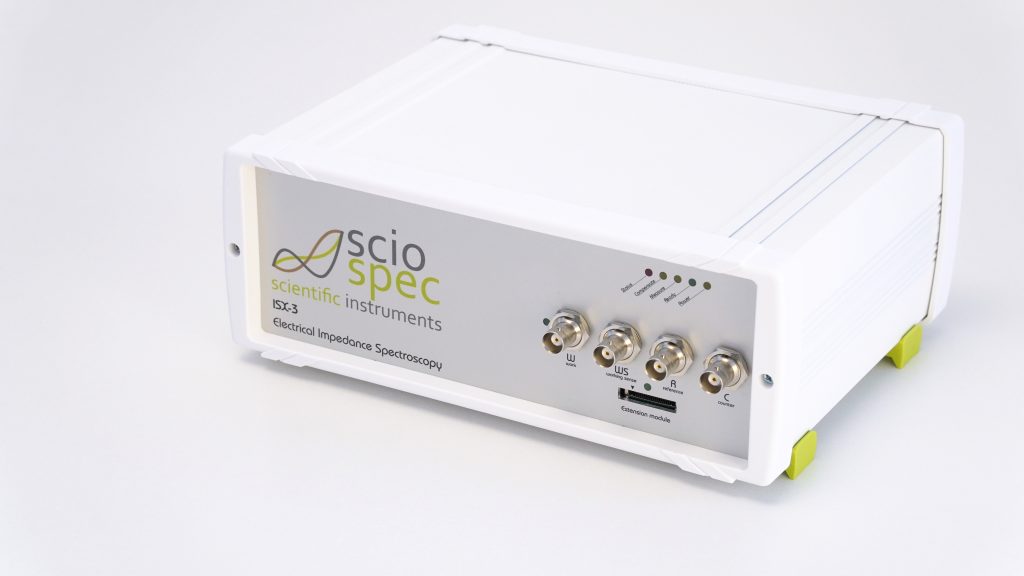
Sciospec’s ISX-3 system was a core component of this study providing high-resolution, non-invasive measurements of thoracic and abdominal impedance. These changes were evident well before positioning EIS as a powerful tool in non-invasive hemodynamic monitoring.
*Murphy, E.K., Bertsch, S.R., Klein, S.B., Rashedi, N., Sun, Y., Joyner, M.J., Curry, T.B., Johnson, C.P., Regimbal, R.J., Wiggins, C.C., Senefeld, J.W., Shepherd, J.R.A., Elliott, J.T., Halter, R.J., Vaze, V.S., & Paradis, N.A. Non-invasive biomarkers for detecting progression toward hypovolemic cardiovascular instability in a lower body negative pressure model. Scientific Reports (2024). https://www.nature.com/articles/s41598-024-59139-8
Early detection of hypovolemia remains a clinical challenge. Conventional indicators such as low blood pressure often lag behind actual blood loss delaying intervention. This study showed that thoracic impedance metrics measured with EIS and EIT were more sensitive than traditional vital signs for identifying early-stage hypovolemia.
Data collected using the Sciospec ISX-3 impedance analyzer revealed signal shifts that allowed researchers to detect blood volume changes sooner and with greater precision. The ISX-3’s high-frequency resolution and stable signal output proved critical in capturing early hemodynamic shifts making it a key enabler in this human subject study.
These results support growing interest in comparing EIS vs vital signs as a diagnostic benchmark.
🔍Explore how impedance-based diagnostics can reveal subtle physiological changes. View our research-ready systems.
The research team used the Sciospec ISX-3 impedance analyzer to measure changes in impedance across the chest, abdomen, and arms during staged blood volume reductions. The ISX-3’s high-resolution, multifrequency capabilities allowed for detailed tissue analysis over time.This enabled:
Clear differentiation between baseline and hypovolemic states
Input for machine learning models to support predictive diagnostics
These capabilities provided the study’s backbone for identifying early physiological shifts beyond what standard monitoring could capture.
👉 Want to Learn how our platforms enable real-time physiological research? Contact Our team to learn how our solutions can assist your research.
Sciospec ISX-3’s system helps detect physiological changes before they manifest as clinical symptoms. In this study, impedance shifts gave earlier warnings than heart rate or blood pressure readings.
Key features of the Sciospec EIS platform:
Together, these capabilities enabled early-stage detection in a real-world physiological model a prime use case of impedance monitoring in critical care research.
👉 Planning a physiological study using EIS? Explore the ISX-3 analyzer for life science applications.
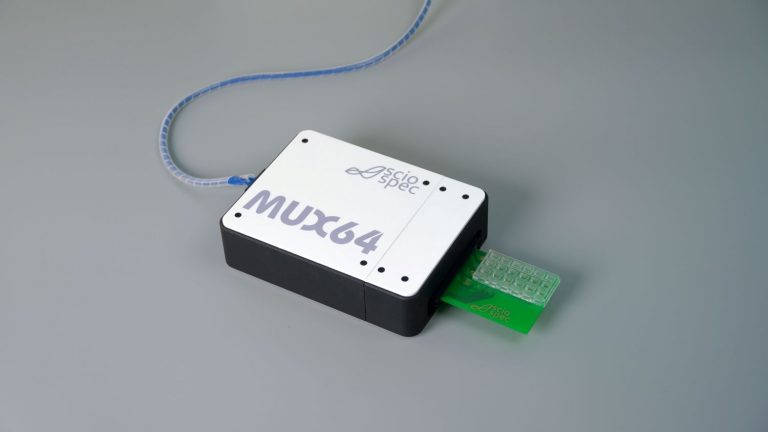
While this study used a single-subject model, many physiological research settings require higher throughput or multi-site monitoring. The ISX-3 platform supports up to 64 channels with modular multiplexers, allowing:
This scalability helps researchers transition from pilot studies to larger clinical trials with minimal redesign.
👉 Need a scalable impedance platform? See how our modular EIS systems scale from pilot to clinical trial
Sciospec Solutions for Medical Research
For clinical and translational research, the Medical Research ISX-3 combines high-performance measurement with safety-focused design. It integrates smoothly into:
This makes it especially valuable for applications at the crossroads of bioengineering, physiology, and diagnostics.
🏥 Evaluate how the Medical Research ISX-3 can accelerate your clinical development pipeline. See technical details and clinical use features
Our experts are ready to help you understanding how this technology works and how you can apply and integrate it into your work. Get in touch today to get a personalized consultation to enhance your work with our advanced solutions
Answer:
Lower body negative pressure (LBNP) is a laboratory technique that applies mild suction to the lower half of the body, causing blood to pool in the legs. This safely mimics early-stage hypovolemia without removing actual blood and allows researchers to study cardiovascular responses under controlled conditions. LBNP enables the evaluation of non-invasive hemodynamic monitoring methods by replicating internal volume shifts before typical vital signs like blood pressure or heart rate begin to change. In several studies using Sciospec’s ISX-3 platform, impedance measurements reflected these shifts with high sensitivity.
👉 Interested in how impedance-based monitoring responds to simulated blood loss? Learn more about our ISX-3
Electrical impedance spectroscopy measures how tissues respond to small, varying electrical currents. As blood volume changes in areas like the chest or arms during early-stage hemorrhage, the electrical properties (resistance and phase) shift accordingly .In recent studies, including LBNP trials, EIS has reliably detected impedance shifts before traditional clinical indicators like heart rate or blood pressure responded especially when monitoring impedance relative to baseline. Devices such as the Sciospec ISX‑3 enable these precise, time-based measurements.
Research has shown that impedance changes in different areas respond differently during hypovolemia. For example, one study noted that impedance in the chest (thorax) is highly sensitive to early fluid shifts, while another found opposing changes in arm versus leg impedance as blood pooled in the lower body. By comparing signals from multiple anatomic locations, researchers can improve detection sensitivity. Systems like Sciospec’s ISX-3 platform support these multi-site measurements enabling comparative analysis during research.
Studies using LBNP have found strong statistical correlations between impedance changes and simulated blood volume loss. For instance, limb impedance values closely matched estimated blood loss with high correlation coefficients. These findings suggest multi-region impedance spectroscopy may offer semi-quantitative insight into blood volume changes. The Sciospec EIS system : ISX-3 captures these shifts with precision across multiple frequencies, supporting research into estimating fluid loss without invasive methods.
While impedance techniques offer early detection benefits, they also come with challenges. Individual anatomy, electrode placement, posture, and fluid status can influence readings Additionally, impedance methods like EIS and EIT often work best when interpreted relative to a baseline measurement and may need to be combined with other data for highest accuracy.
Impedance spectroscopy can detect blood volume changes at very early stages—sometimes within minutes of fluid shift onset—well before traditional signs like blood pressure drop. In controlled LBNP studies, impedance changes were observed even at low suction levels (e.g., 15 mmHg), corresponding to blood loss under 500 mL.
Systems like the Sciospec ISX-3 enable high-resolution tracking of these subtle shifts, making them valuable in early-detection research
Yes, impedance monitoring is completely non-invasive. It uses surface electrodes to apply small alternating currents and measures how body tissues respond—without needles, blood draws, or imaging. This makes it ideal for continuous, real-time physiological monitoring in both lab and clinical settings.
The ISX-3 platform supports non-invasive setups across thoracic, abdominal, or limb regions, giving researchers flexibility without compromising signal quality.
Sciospec’s equipment including the ISX-3 is engineered for integration with a wide range of custom sensors, from wearable patches to biochip arrays. With scalable architecture, configurable input channels, and real-time data streaming, it allows researchers and developers to prototype and validate sensor systems for clinical or field use.
This flexibility makes it a reliable foundation for translational studies and early-stage medical device development.
This study reinforces the value of impedance spectroscopy as a non-invasive tool for early hypovolemia detection. Sciospec’s ISX-3 system enabled the precise, flexible signal acquisition needed to capture physiological changes ahead of traditional vital signs.
As healthcare moves toward predictive and personalized monitoring, Sciospec platforms offer the performance, adaptability and scalability needed to lead this shift.
👉 Looking to integrate high-resolution impedance into your study? Request expert guidance on building your EIS-based study
💡Curious for more? Check out our latest developments and products.
🧪Want to try it yourself? Contact us for more information
🚀Looking for a tailored solution? Our experts can help!
📢 Follow us on LinkedIn for more updates.
#Innovation #Sciospec #EarlyHypovolemia #physiologicalresearch
explore by relevant keywords
…or just browse our most recent posts: