
Scalable Electrical Impedance Tomography Systems for Research and OEM Integration
Sciospec builds flexible EIT systems, scalable research platforms, and OEM-ready measurement architectures for teams that need to image, monitor, or integrate impedance-based information beyond standard lab setups.
🔎 Discuss your EIT application with our experts
⚙️ Explore EIT systems and OEM options


Electrical Impedance Tomography Platforms Built for Research, Scaling, and OEM Integration
Electrical Impedance Tomography (EIT) is a tomographic imaging method that reconstructs conductivity or impedance distributions from boundary current–voltage measurements acquired through electrode arrays. While many first encounter EIT through lung monitoring, it supports a much wider range of applications — from industrial process monitoring and material characterization to bioanalytical sensors, organ-on-chip systems, and advanced medical research.
Sciospec develops EIT systems for teams that need more than a fixed-function imaging device. Our platforms combine flexible EIT instrumentation, scalable multichannel architecture, open data access, and OEM-ready integration options. This allows researchers, engineers, and device manufacturers to start with a professional laboratory setup and move toward customized or embedded EIT implementations without changing technology partner or rebuilding their workflow from scratch.
A Sciospec EIT platform can support very different development stages:
Research entry and method development
Start with standard EIT instruments, phantom tanks, electrode interfaces, and software workflows for time-difference or frequency-difference imaging.
Scaling and advanced experiments
Move to higher channel counts, configurable injection patterns, multifrequency measurements, synchronized acquisition, and custom electrode geometries.
OEM and product integration
Transfer proven measurement concepts into custom hardware, embedded modules, or application-specific systems with support for interfaces, data workflows, safety concepts, and lifecycle considerations.
This platform approach is especially relevant when EIT is not just a one-off experiment, but part of a longer research roadmap, a new measurement architecture, or a future product. Whether you are upgrading an academic EIT setup, building a custom imaging system, or evaluating EIT as a differentiating feature in a medical, industrial, or bioanalytical device, Sciospec provides a practical path from first measurements to real-world deployment.
Sciospec EIT Platform capabilities
| 16–256 channels | Scale from compact setups to high-density EIT architectures |
| Truly simultaneous sampling | Stable acquisition for dynamic and time-sensitive imaging |
| Freely configurable injection patterns | Adapt to custom electrode geometries and research workflows |
| Multifrequency and spectral EIT | Go beyond single-frequency imaging approaches |
| Up to 100 fps | Suitable for dynamic physiological and industrial processes |
| EIDORS & MATLAB compatible | Open workflows instead of closed black-box systems |
| Medical-research-oriented safety options | Simplify integration into physiological and clinical research |
| OEM-ready platform architecture | Move from lab setup to embedded product development |
Used in Research, Industrial R&D, and OEM Development Worldwide
Our technologies are used by research groups, industrial developers, and OEM teams worldwide, including projects involving:


Sciospec measurement architectures and OEM technologies are also integrated into specialized research platforms and commercial systems developed by domain-leading organizations.
Choose the Right EIT Starting Point for Your Application.
Different Electrical Impedance Tomography (EIT) applications require different measurement architectures. Some projects need an easy entry point for first experiments, while others require higher channel counts, multifrequency operation, synchronized acquisition, or a path toward custom integration and OEM development.
Sciospec offers scalable EIT platforms ranging from compact research systems to advanced multichannel architectures and OEM-ready solutions. All systems are built on a shared technology foundation, allowing users to scale from first measurements to advanced or embedded EIT applications without changing ecosystem, software workflow, or technology partner.
EIT16 – Compact Entry into Electrical Impedance Tomography
The EIT16 is an accessible starting point for researchers, universities, feasibility studies, and compact EIT applications. It combines fast setup, professional-grade instrumentation, and straightforward operation in a 16-channel platform.
Typical use cases include educational and algorithm development setups, industrial feasibility studies, sensor and electrode evaluation, and first-stage EIT prototyping.
The EIT16 supports configurable injection patterns, multifrequency operation, and integration with reconstruction workflows such as EIDORS and MATLAB, making it suitable for both application-focused users and algorithm developers.
EIT32/64/128+ – Scalable Multichannel EIT Platforms
For advanced Electrical Impedance Tomography applications, cutting-edge research, and versatile application needs, Sciospec provides scalable EIT platforms with 32, 64, 128, and up to 256 channels in standard configurations.
These systems are designed for demanding research and integration scenarios involving high-density electrode configurations, multilayer and 3D EIT setups, synchronized and multifrequency measurements, and advanced medical, industrial, or bioanalytical workflows.
With tightly synchronized acquisition and flexible injection matrix architectures, the EIT32/64/128+ platform supports complex EIT measurement strategies while maintaining a clear scaling path for future expansion.
ISX-3 EIT – Combining Impedance Spectroscopy and Tomography
While the fully simultaneous acquisition architecture of the EIT32/64/128+ product range is built for high-frame-rate EIT, the ISX-3 EIT is the right starting point when applications require the measurement range, accuracy, and flexibility of a high-performance impedance analyzer with added EIT capability.
It is especially relevant for bioanalytical research, material characterization, sensor development, multifrequency analysis, and experimental or non-standard EIT configurations with moderate frame-rate requirements.
This hybrid approach is useful wherever classical Electrical Impedance Spectroscopy (EIS) and tomographic imaging need to coexist within one measurement architecture.
LungEIT Kit – Fast Entry into Lung Imaging Research
For researchers focused on lung ventilation monitoring and clinical EIT workflows, the LungEIT Kit provides a streamlined entry path into pulmonary Electrical Impedance Tomography.
The kit combines EIT hardware, electrode belt systems, cabling, reconstruction software, and medical-research-oriented safety concepts. This enables users to establish lung imaging experiments quickly without first developing custom electrode setups, synchronization workflows, or reconstruction pipelines from scratch.
Beyond Standard Instruments: OEM and Custom EIT Systems
Many successful EIT applications eventually outgrow standard laboratory instrumentation. Sciospec supports this transition through customizable hardware platforms, OEM modules, and application-specific EIT systems.
Whether the goal is a portable diagnostic device, a high-throughput industrial imaging platform, a bioanalytical sensor system, or a large multichannel research setup, the underlying Sciospec architecture provides a scalable path from research instrumentation to integrated product solutions.
Core EIT system capabilities
Electrical Impedance Tomography performance depends on far more than channel count alone. Real-world EIT applications are shaped by the interaction between acquisition architecture, injection flexibility, synchronization, reconstruction workflow, signal quality, and scalability.
Sciospec EIT platforms are designed to support both advanced research and application-specific system integration. Instead of restricting users to a fixed imaging workflow, the platform supports a wide range of electrode configurations, measurement strategies, and reconstruction approaches.
Scalable Multichannel EIT Architectures
Sciospec EIT systems support configurations from 16 up to 256 channels in standard platforms, with additional custom architectures available for specialized applications.
Depending on the application, systems can support:
- compact research setups
- high-density electrode arrangements
- multilayer and 3D EIT
- planar and custom sensor geometries
- industrial process tomography
- embedded OEM imaging systems
The platform architecture is optimized for scalable multichannel acquisition without forcing users into rigid hardware limitations.
Broad Frequency and Excitation Flexibility
Different EIT applications operate in very different electrical regimes. Biological tissue imaging, industrial process monitoring, material characterization, and bioanalytical sensing all place different demands on frequency range, excitation amplitudes, and integration strategy.
Sciospec platforms therefore support:
- broad frequency operation (e.g. 100 Hz to 1 MHz)
- current excitation ranges from 100 nA to 10 mA
- spectral measurements and frequency sweeps
- configurable integration times for balancing speed and signal quality
This flexibility enables adaptation to highly diverse EIT workflows without changing instrumentation platforms.
Truly Simultaneous Sampling and Flexible Injection Control
High-quality EIT measurements require synchronized acquisition and precise control over current injection paths. Sciospec systems combine simultaneous multichannel voltage acquisition with flexible injection matrix architectures, enabling:
- configurable injection patterns
- multifrequency and spectral EIT workflows
- synchronized stimulation and triggering
- time-difference and frequency-difference imaging
- advanced experimental measurement strategies
Depending on configuration, systems support frame rates of up to 100 fps and beyond in specialized setups.
Open Reconstruction and Data Workflows
Many advanced EIT users require direct access to raw measurement data and reconstruction workflows. Instead of operating as a closed imaging system, Sciospec platforms are designed to integrate into existing research and development environments.
Supported workflows include:
- EIDORS compatibility
- MATLAB integration
- raw EIT data export
- custom reconstruction pipelines
- integration into external analysis environments
For users seeking rapid entry into EIT imaging, standard reconstruction software for time- and frequency-difference imaging is also available.
Medical Research and Advanced Integration Options
For medical and physiological research applications, Sciospec offers systems with additional safety-oriented features and medical-research-focused configurations, including IEC 60601-1-oriented design concepts.
The platform can also be adapted through:
- custom front-end connectors
- isolated interfaces and synchronization IO
- AC-coupled frontends
- electrode belts and phantom tanks
- custom sensor adapters
- wireless and embedded communication options
- OEM modules and integrated imaging subsystems
This modular approach allows the same core EIT technology platform to scale from early-stage laboratory experiments to highly specialized application systems.
From laboratory research to EIT embedded in your product
Many Electrical Impedance Tomography projects begin as research workflows: validating a measurement concept, testing reconstruction algorithms, evaluating electrode geometries, or exploring whether impedance-based imaging can reveal meaningful information in a biological, industrial, or technical system.
Once these first experiments succeed, the challenge often changes. The question is no longer simply whether EIT works in principle, but whether it can be transformed into a reliable, scalable, and maintainable product architecture.
This transition from laboratory setup to embedded application is one of the core strengths of the Sciospec platform approach.
A Scalable Path from Experiment to Product
Sciospec EIT systems are designed as scalable technology platforms rather than isolated research instruments. The same measurement architecture can support:
- early feasibility studies
- advanced multichannel research
- custom experimental setups
- integrated subsystems
- embedded OEM products
- application-specific imaging devices
This allows development teams to build on an established acquisition and reconstruction ecosystem instead of redesigning the complete measurement chain when moving toward productization.
A project may start with a standard EIT instrument, LungEIT setup, phantom tank, or custom electrode arrangement. From there, the system can evolve toward:
- application-specific hardware
- embedded measurement modules
- custom front-end architectures
- integrated reconstruction workflows
- synchronized multimodal systems
- production-oriented device integration


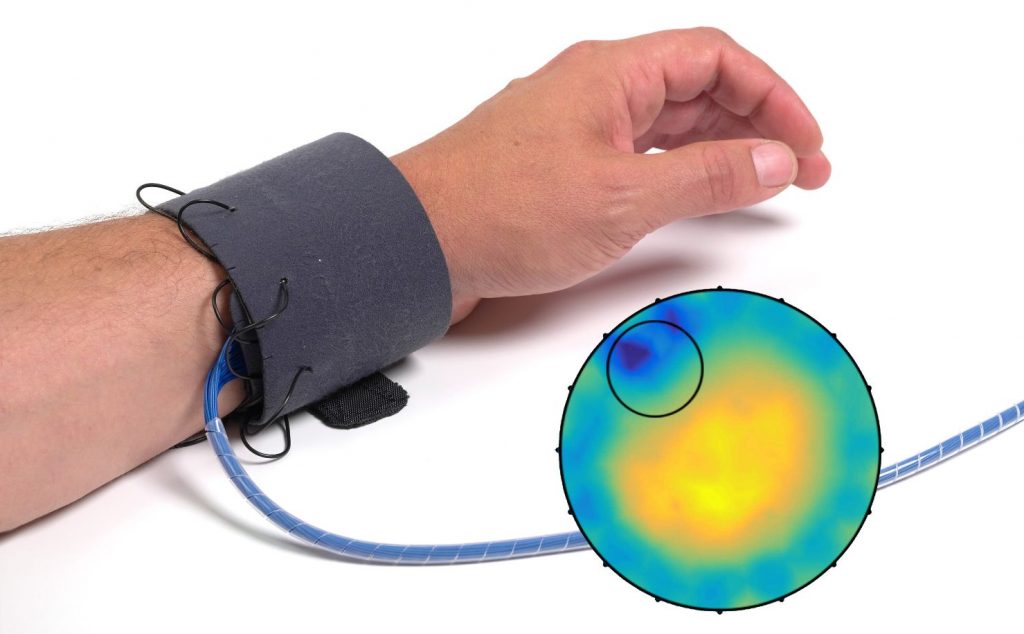
Reducing Technical and Development Risk
Developing a custom EIT system from scratch involves significantly more than image reconstruction alone. Synchronization, signal integrity, injection architecture, electrode interfaces, safety concepts, EMC behavior, firmware control, data workflows, and scalability all become critical design factors.
By starting from a mature and flexible EIT platform, teams can reduce development risk while accelerating prototyping and system integration.
Typical OEM and integration discussions involve:
- form factor and integration constraints
- electrode and sensor geometry
- synchronization and triggering
- frame rate and acquisition architecture
- raw data access and reconstruction workflow
- API and firmware integration
- isolation and safety concepts
- data throughput and interface requirements
- lifecycle and long-term platform strategy
This is especially important in applications where EIT becomes part of a larger system architecture rather than a standalone research device.
OEM EIT for Medical, Industrial, and Bioanalytical Systems
- lung ventilation monitoring
- industrial process tomography
- organ-on-chip systems
- bioanalytical sensing
- material characterization
- environmental monitoring
- custom sensor systems
- synchronized multimodal platforms
- an embedded EIT module
- a custom measurement subsystem
- a fully integrated imaging architecture
- a branded end-customer product
From Research Workflow to Long-Term Platform Strategy
One of the biggest challenges in EIT development is ensuring that early research decisions do not become dead ends later. Electrode architecture, synchronization strategy, reconstruction workflow, and interface concepts chosen during feasibility stages can strongly influence later scalability and integration options.
Sciospec therefore approaches EIT not only as instrumentation, but as a long-term platform architecture that can evolve together with the application itself.
Whether the goal is a proof-of-concept study, a next-generation medical device, a high-throughput industrial imaging system, or a custom bioanalytical platform, the measurement architecture can scale from laboratory research toward robust real-world deployment.

EIT applications across domains
Electrical Impedance Tomography (EIT) is used across a wide range of scientific, medical, and industrial applications. Depending on the measurement architecture, electrode configuration, reconstruction strategy, and operating frequency range, EIT can provide dynamic insights into conductivity distributions, functional changes, material states, and structural processes that are difficult to access with conventional sensing technologies.
Sciospec EIT platforms are designed to support this diversity — from compact research setups to highly specialized multichannel imaging systems and OEM-integrated products.
Lung EIT and ventilation monitoring
Electrical Impedance Tomography is widely used for real-time visualization of regional lung ventilation and pulmonary dynamics. EIT enables radiation-free bedside monitoring and has become one of the most established clinical and physiological EIT applications.
Real-Time Lung Function Imaging with Electrical Impedance Tomography
Electrical Impedance Tomography (EIT) is one of the most established clinical and research applications of functional electrical impedance tomography imaging. In thoracic EIT, a set of surface electrodes is placed around the thorax to measure relative impedance changes during the respiratory cycle. Small alternating currents are injected across pairs of electrodes while voltage measurements are recorded from the remaining electrodes. These EIT measurements are then reconstructed into functional images showing the regional distribution of lung ventilation and lung impedance changes over time.
Unlike CT, MRI, or positron emission tomography (PET), Electrical Impedance Tomography does not use ionizing radiation and can operate continuously at the bedside. EIT devices are significantly smaller and less costly than conventional imaging systems, making them highly attractive for lung function monitoring in intensive care medicine, emergency medicine, assisted mechanical ventilation, and respiratory research workflows.
The most common clinical application of thoracic EIT is continuous monitoring of regional lung ventilation in mechanically ventilated patients. Because lung tissue exhibits strong impedance changes during inhalation and exhalation, EIT can generate functional images that visualize regional air distribution, lung recruitment, ventilation heterogeneity, lung collapse, end expiratory lung volume, and changes in alveolar ventilation during spontaneous breathing or mechanical ventilation.
Time difference EIT (td-EIT) compares measurements recorded during different physiological states and helps visualize changes between dependent and non dependent lung regions. This enables evaluation of regional ventilation delay, regional lung function, lung mechanics, airway pressure effects, positive end expiratory pressure (PEEP), ventilator settings, and lung protective ventilation strategies during acute respiratory distress syndrome (ARDS), acute lung injury, and other lung diseases.
Because of these capabilities, EIT monitoring is increasingly explored in:
- intensive care unit (ICU) monitoring
- mechanically ventilated patients
- spontaneous breathing studies
- respiratory mechanics research
- regional lung perfusion assessment
- pneumothorax and pleural effusion monitoring
- cystic fibrosis research
- ventilation strategy optimization
- ventilator associated lung injury (VALI) prevention
- clinical studies on treatment outcomes and regional ventilation
LungEIT Kit — Practical Entry into Pulmonary EIT Research
For researchers and clinical engineering teams seeking a practical entry point into pulmonary EIT workflows, the Sciospec LungEIT Kit combines:
- EIT instrumentation
- electrode belts
- software and reconstruction workflows
- synchronized acquisition
- cabling and accessories
- medical-research-oriented safety concepts
into a ready-to-use research platform for thoracic EIT and lung ventilation monitoring.
The LungEIT Kit is designed to reduce the complexity of setting up pulmonary EIT experiments and allows research groups to focus on lung function analysis, EIT reconstruction algorithms, physiological measurements, and clinical application development instead of building the complete acquisition chain from scratch.
EIT Reconstruction, EIDORS, and Lung Imaging Research
Modern EIT systems rely heavily on reconstruction algorithms and computational modeling. The mathematical formulation of reconstructing conductivity from boundary current–voltage measurements is known as Calderón’s inverse problem — a non-linear and ill-posed inverse problem requiring sophisticated numerical algorithms and regularization methods.
Different reconstruction approaches may include:
- time-difference EIT (td-EIT)
- absolute EIT (a-EIT)
- frequency-difference EIT
- Sheffield back-projection
- Gauss–Newton reconstruction
- FEM-based reconstruction models
- regularization-based iterative algorithms
The open-source EIDORS project provides a widely used framework for EIT data reconstruction and display, supporting research and development in biomedical engineering and electrical impedance tomography studies.
Sciospec EIT systems support:
- EIDORS integration
- MATLAB workflows
- raw EIT data access
- custom reconstruction pipelines
- multifrequency EIT
- synchronized measurement workflows
- advanced electrode configurations
allowing researchers and OEM developers to adapt EIT systems to highly specialized physiological measurement and lung imaging applications.
Clinical Background and Development of Lung EIT
Electrical Impedance Tomography has undergone more than 30 years of development, with a growing number of clinical studies, EIT research programs, and commercial EIT devices contributing to increasing scientific and clinical interest in the technology.
Early systems such as the Sheffield Mark 1 already demonstrated how 16-electrode EIT systems could reconstruct tomographic images from voltage measurements and constant current injection patterns. Modern EIT devices now support advanced multichannel acquisition, multiple frequencies, synchronized measurements, and active surface electrodes capable of compensating for insufficient skin contact and electrode performance variations.
Compared with CT or MRI, EIT generally provides substantially lower spatial resolution — often described in literature as a fraction of the electrode array diameter rather than millimeter-scale anatomical detail. However, EIT offers much higher temporal resolution and enables continuous functional imaging of physiological changes in real time.
This combination of:
- radiation-free imaging
- bedside monitoring
- functional imaging
- high temporal resolution
- compact instrumentation
- scalable multichannel architectures
is one of the reasons Electrical Impedance Tomography continues to attract growing interest across clinical practice, biomedical engineering, and physiological research.
Electrical Impedance Tomography has undergone decades of scientific development and continues to attract growing clinical and research interest. Modern EIT systems now support advanced reconstruction workflows, multifrequency measurements, synchronized acquisition strategies, and improved electrode technologies that help reduce artifacts related to electrode contact quality and inter-subject variability.
Sciospec supports lung EIT and ventilation monitoring research through scalable EIT platforms, synchronized multichannel acquisition, configurable injection patterns, EIDORS compatibility, MATLAB workflows, medical-research-oriented safety concepts, and flexible electrode or synchronization options. For fast and practical entry into lung imaging applications, the Sciospec LungEIT Kit provides a complete research-oriented setup with EIT instrumentation, electrode belts, software, and accessories.
Explore the LungEIT Kit and pulmonary EIT research solutions →
Discuss your pulmonary imaging application with our experts →
Industrial EIT for Process Monitoring, Flow Imaging, and Material Characterization
Industrial EIT systems can visualize dynamic processes inside pipes, reactors, tanks, and multiphase systems. Typical applications include flow monitoring, mixing analysis, contamination tracking, and process optimization.
Industrial Electrical Impedance Tomography is used to visualize conductivity distributions and dynamic processes inside pipelines, tanks, reactors, and multiphase systems. In many industrial environments, conventional sensing technologies provide only point measurements or indirect process indicators. EIT adds spatially resolved information, enabling insight into flow behavior, mixing dynamics, contamination propagation, phase distributions, and process stability in real time.
Typical industrial EIT applications include monitoring gas-liquid flows, observing mixing processes, detecting sedimentation or deposits, analyzing fluidized beds, and tracking material transitions inside production systems. Because EIT measurements can operate continuously and non-destructively, the technology is highly attractive for process optimization, inline monitoring, and closed-loop control strategies.
Industrial EIT setups often require highly application-specific measurement architectures. Electrode geometries, frame rates, injection strategies, environmental robustness, and integration into external automation systems strongly depend on the process itself. Sciospec supports these requirements through scalable multichannel platforms, configurable interfaces, custom sensor integration, synchronized acquisition, and OEM-ready system architectures. This flexibility allows industrial users to adapt EIT technology to highly specialized process environments instead of forcing the application into a fixed imaging system.
Let our experts help you evaluate EIT for your industrial process or flow imaging application →
Bioanalytical EIT for Organ-on-Chip, Cell Culture, and Sensor Applications
EIT is increasingly explored for bioanalytical applications involving cell cultures, organoids, microfluidics, and impedance-based biosensors, where spatially resolved electrical measurements provide additional functional insight.
Electrical Impedance Tomography is increasingly explored in bioanalytical and biosensing environments where spatially resolved electrical measurements provide functional insight into biological systems. Compared to classical impedance spectroscopy, EIT enables visualization of conductivity distributions and localized electrical changes inside complex biological arrangements such as organoids, microfluidic systems, cell cultures, and sensor arrays.
Particularly in organ-on-chip and advanced in-vitro models, researchers are seeking tools that can monitor dynamic biological processes non-invasively and with high temporal resolution. EIT offers the potential to observe changes in tissue morphology, barrier integrity, cell growth, fluid distributions, or localized biological activity without relying solely on optical access or endpoint assays.
These applications often require unconventional electrode geometries, compact sensor integration, multifrequency measurements, and highly customized acquisition workflows. Sciospec EIT platforms are designed to support this flexibility through configurable injection patterns, scalable multichannel acquisition, custom sensor adapters, and integration with broader electroanalytical workflows. Combined EIS/EIT environments such as the ISX-3 EIT are especially attractive for researchers who need both localized impedance analysis and tomographic imaging within one platform architecture.
Beyond research instrumentation, Sciospec also supports OEM integration for companies developing next-generation bioanalytical devices, organ-on-chip platforms, or impedance-based diagnostic systems.
Discuss EIT integration for your bioanalytical or organ-on-chip platform →
Material Characterization and Non-Destructive Testing
EIT techniques are also applied in environmental and geophysical scenarios such as soil monitoring, moisture distribution analysis, subsurface characterization, and pollutant tracking.
Electrical Impedance Tomography can support non-destructive investigation of material structures, conductivity distributions, and dynamic changes inside technical or functional materials. Because electrical properties strongly correlate with structural composition, moisture content, material state, and defect formation, EIT provides a way to visualize internal changes that are difficult to detect through purely optical or point-based measurements.
Application areas include conductivity mapping in composite materials, detection of structural inhomogeneities, monitoring curing or aging processes, investigation of porous materials, and analysis of functional coatings or electrically active structures. In research environments, EIT is also explored for studying dynamic changes inside smart materials, battery systems, and complex multiphase materials.
Compared to destructive analysis methods, EIT offers the advantage of continuous and repeatable monitoring without damaging the sample. At the same time, measurement architectures can be adapted to highly diverse geometries ranging from planar sensor arrangements to cylindrical or multilayer electrode configurations.
Sciospec EIT platforms support these workflows through configurable hardware architectures, broad frequency ranges, scalable channel counts, and flexible interface options. This enables researchers and industrial developers to adapt EIT technology to highly specialized material analysis problems instead of relying on rigid predefined measurement systems.
Explore EIT solutions for material analysis and non-destructive testing with our experts →
Environmental Monitoring
EIT techniques are also applied in environmental and geophysical scenarios such as soil monitoring, moisture distribution analysis, subsurface characterization, and pollutant tracking.
Electrical Impedance Tomography can support non-destructive investigation of material structures, conductivity distributions, and dynamic changes inside technical or functional materials. Because electrical properties strongly correlate with structural composition, moisture content, material state, and defect formation, EIT provides a way to visualize internal changes that are difficult to detect through purely optical or point-based measurements.
Application areas include conductivity mapping in composite materials, detection of structural inhomogeneities, monitoring curing or aging processes, investigation of porous materials, and analysis of functional coatings or electrically active structures. In research environments, EIT is also explored for studying dynamic changes inside smart materials, battery systems, and complex multiphase materials.
Compared to destructive analysis methods, EIT offers the advantage of continuous and repeatable monitoring without damaging the sample. At the same time, measurement architectures can be adapted to highly diverse geometries ranging from planar sensor arrangements to cylindrical or multilayer electrode configurations.
Sciospec EIT platforms support these workflows through configurable hardware architectures, broad frequency ranges, scalable channel counts, and flexible interface options. This enables researchers and industrial developers to adapt EIT technology to highly specialized material analysis problems instead of relying on rigid predefined measurement systems.
Discuss EIT architectures for environmental and geophysical monitoring →
Latest Products


What is Electrical Impedance Tomography?
Electrical Impedance Tomography (EIT) is a non-invasive imaging technique that reconstructs conductivity or impedance distributions inside an object from electrical measurements acquired at its boundary. In most EIT systems, a set of surface electrodes is placed around the object or body region being examined. Small alternating electrical currents are injected through selected electrode pairs while voltage measurements are recorded from the remaining electrodes.
These measurements are processed to generate tomographic images representing the internal electrical properties of the measured system.
Because electrical conductivity changes depending on tissue composition, material structure, fluid distribution, or biological activity, Electrical Impedance Tomography can reveal dynamic internal processes that are difficult to observe with conventional sensing technologies.
How Does EIT Work?
EIT Research and Development
Electrical Impedance Tomography has undergone more than 30 years of scientific and engineering development. Early systems such as the Sheffield Mark 1 demonstrated how electrode-based current injection and voltage measurements could generate tomographic images from conductivity changes inside the body. The open-source EIDORS framework has also become an important tool for EIT reconstruction research and algorithm development.
Dedicated EIT Systems vs. General Impedance Analyzers
In principle, many impedance analyzers can acquire raw data suitable for Electrical Impedance Tomography experiments. However, advanced EIT applications often require capabilities beyond conventional impedance spectroscopy instrumentation.
Dedicated EIT systems are typically optimized for:
- synchronized multichannel acquisition
- flexible injection path selection
- high frame rates
- scalable electrode configurations
- parallel or semi-parallel measurements
- synchronized triggering and stimulation
- integration into reconstruction workflows
These requirements become especially important in dynamic applications such as lung ventilation monitoring, industrial process tomography, and high-density bioanalytical imaging.
Sciospec EIT platforms combine scalable multichannel instrumentation with flexible reconstruction workflows including EIDORS and MATLAB integration. This enables researchers and developers to adapt EIT technology to highly diverse applications ranging from medical imaging and organ-on-chip systems to industrial monitoring and custom OEM architectures.
EIT Instrumentation — What Matters in Real-World Electrical Impedance Tomography Systems
Electrical Impedance Tomography performance depends on far more than channel count alone. Real-world EIT applications are shaped by acquisition architecture, injection flexibility, synchronization, signal quality, reconstruction workflow, and scalability.
Because EIT images are reconstructed from many current injection paths and voltage measurements across multiple electrodes, the underlying instrumentation architecture strongly influences image quality, temporal resolution, and application flexibility.
Frame Rate Depends on the Entire System Architecture
Frame rate is one of the most visible EIT specifications, but it depends on many interacting factors:
- electrode count
- number of injection patterns
- integration time
- switching architecture
- acquisition parallelism
- reconstruction workflow
Higher frame rates often require trade-offs between speed, signal quality, and measurement complexity. For this reason, meaningful EIT performance cannot be reduced to one “maximum fps” number alone.
Parallel Acquisition and Scalable Multichannel EIT
As electrode count increases, the number of possible measurement combinations grows rapidly. Sequential acquisition architectures can therefore become limiting in dynamic or high-density EIT applications.
Sciospec EIT systems use synchronized multichannel acquisition architectures that support:
- scalable EIT configurations from 16 to 256 channels
- high-density and multilayer EIT
- multifrequency workflows
- synchronized measurements
- configurable injection patterns
- custom electrode geometries
- OEM-ready architectures
Frequency Flexibility and Spectral EIT
- broad frequency operation
- multifrequency and spectral EIT
- configurable excitation ranges
- frequency sweeps
- adjustable integration strategies
Open Integration Instead of Closed Black Boxes
- raw EIT data access
- EIDORS and MATLAB integration
- synchronization IO
- external triggering
- API-based instrument control
- custom reconstruction pipelines
- OEM and embedded integration
From Research Setups to Embedded Systems
Depending on the application, EIT systems may require:
- electrode belts
- phantom tanks
- isolated interfaces
- custom connectors
- sensor adapters
- synchronization interfaces
- application-specific frontends
Sciospec supports these requirements through configurable platform architectures that scale from laboratory research to advanced OEM and embedded imaging systems.
Medical Research and Safety-Oriented System Design
Medical and physiological EIT applications add another layer of instrumentation requirements. Electrical safety, isolation, electrode handling, synchronization with physiological signals, and documentation become central design concerns.
For medical research environments, Sciospec EIT systems are available with safety-oriented configurations, medical-research-focused options, isolated interfaces, AC-coupled frontends, ECG synchronization, and related accessories. For OEM applications, these concepts can become part of a broader system architecture and product development path.
EIT Image Reconstruction, EIDORS, and Open Data Access.
Electrical Impedance Tomography is fundamentally a computational imaging technique. The measurement hardware acquires boundary current–voltage data, while reconstruction algorithms convert these measurements into functional EIT images representing internal conductivity distributions.
Because EIT reconstruction is an inverse problem, image quality depends not only on reconstruction algorithms, but also on synchronized acquisition, signal stability, electrode quality, and measurement architecture.
Open Reconstruction Workflows Instead of Closed Systems
Many advanced EIT users require direct access to raw measurement data, reconstruction pipelines, and synchronization workflows. Researchers and OEM developers often need to:
- implement custom reconstruction algorithms
- integrate EIT into external software environments
- synchronize measurements with external systems
- adapt preprocessing and visualization workflows
- develop application-specific imaging strategies
Sciospec EIT platforms are designed to support these open workflows rather than restricting users to predefined imaging environments.
EIDORS and MATLAB Integration
Sciospec systems support integration with EIDORS, the widely used open-source framework for Electrical Impedance Tomography reconstruction and visualization.
Supported workflows include:
- raw EIT data export
- EIDORS integration
- MATLAB-based reconstruction
- custom reconstruction pipelines
- multifrequency EIT workflows
- synchronized acquisition and triggering
This flexibility is especially important in research environments where reconstruction methods and imaging strategies evolve continuously.
From Research Algorithms to Embedded Imaging Systems
As EIT applications move toward real-world deployment, reconstruction workflows often evolve from experimental research environments into integrated software systems or embedded imaging pipelines.
Sciospec supports this transition through scalable acquisition architectures, open interfaces, synchronized measurement workflows, and OEM-ready integration pathways.
Whether the goal is advanced research, industrial process tomography, lung ventilation monitoring, or embedded EIT product development, the platform can support both exploratory reconstruction research and long-term application integration.
When Electrical Impedance Tomography Is the Right Technology — and When It Is Not
Electrical Impedance Tomography (EIT) is a highly flexible imaging technique, but like any sensing technology, it is not the ideal solution for every application.
The strength of EIT lies in situations where:
- dynamic functional imaging matters more than anatomical detail
- continuous real-time monitoring is required
- radiation-free operation is important
- compact and scalable instrumentation is needed
- flexible electrode geometries or OEM integration are relevant
This makes EIT especially attractive for:
- lung ventilation monitoring
- industrial process tomography
- organ-on-chip systems
- conductivity and flow imaging
- material characterization
- environmental monitoring
- synchronized physiological measurements
Compared with CT or MRI, Electrical Impedance Tomography generally provides lower spatial resolution but much higher temporal resolution. Instead of detailed anatomical imaging, EIT focuses on conductivity changes and functional imaging.
At the same time, EIT image quality can be influenced by:
- electrode placement
- contact quality
- conductivity contrast
- reconstruction assumptions
- inter-subject variability
- measurement noise
For some applications, a simpler Electrical Impedance Spectroscopy (EIS) workflow may also be more practical than full tomographic imaging.
The most successful EIT applications are therefore usually those where the technology is selected intentionally for its unique strengths: dynamic imaging, continuous monitoring, scalable acquisition, and flexible integration into larger systems.
Sciospec supports this broader perspective through flexible platforms that combine Electrical Impedance Tomography, impedance spectroscopy, synchronized measurement workflows, and OEM-ready integration architectures.
Accessories, phantoms, electrodes, and custom setups for EIT
Successful Electrical Impedance Tomography workflows depend on more than the core instrument alone. Electrode geometry, phantom configuration, cabling, synchronization, and sensor integration all influence measurement quality and reconstruction performance.
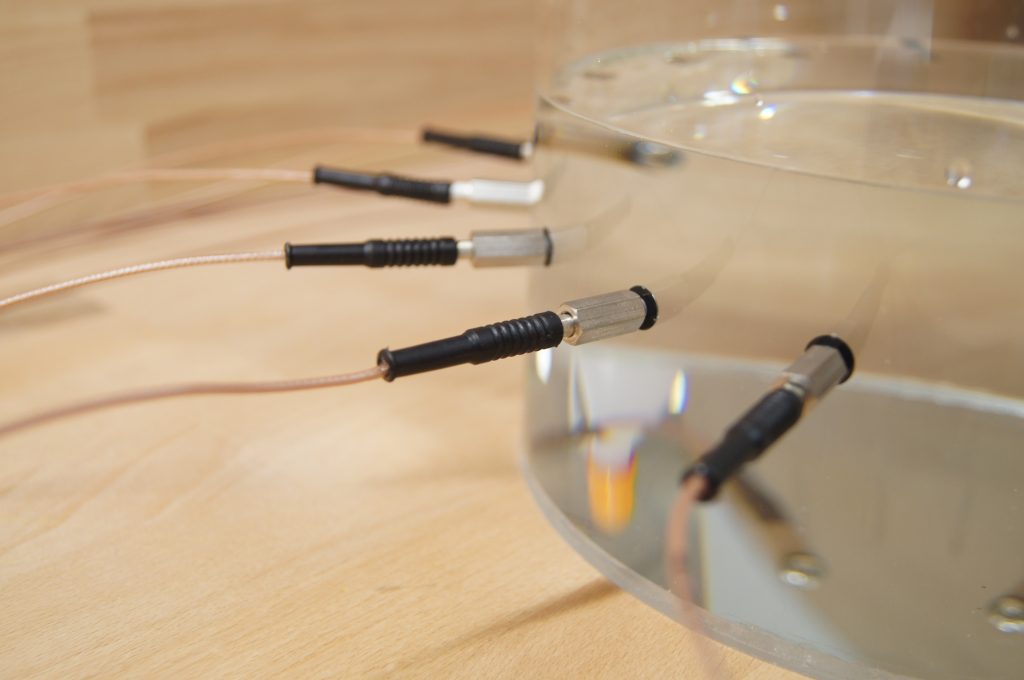
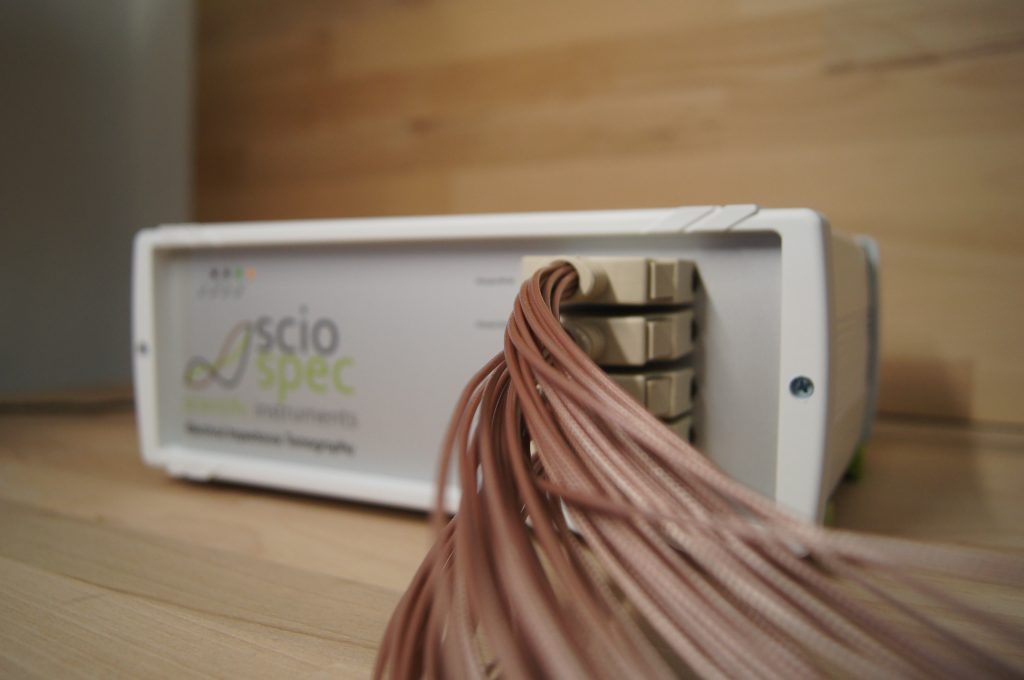
Sciospec supports EIT development through a broad range of accessories, electrode solutions, phantom systems, and custom integration options designed for research, industrial, medical, and OEM environments.
Supported configurations include:
- phantom tanks and validation setups
- electrode belts for lung EIT
- planar and multilayer electrode arrangements
- custom electrode geometries
- sensor and chip adapters
- shielded cabling and synchronization interfaces
- isolated and application-specific frontends
- OEM and embedded integration concepts
Depending on the application, systems can be adapted for:
- industrial process tomography
- organ-on-chip systems
- bioanalytical sensing
- material characterization
- pulmonary EIT workflows
- environmental and geophysical monitoring
- custom research environments
This modular approach allows researchers and OEM developers to build application-specific EIT systems without redesigning the complete acquisition architecture from scratch.

Talk to Sciospec About Your EIT Application or OEM Integration Roadmap
Electrical Impedance Tomography projects rarely follow a standard path. Some teams start with feasibility studies and algorithm development, while others are already building advanced multichannel systems, OEM platforms, or application-specific imaging architectures.
Sciospec supports EIT workflows across all stages of development — from first laboratory experiments to scalable instrumentation platforms and embedded product integration.
Typical discussion topics include:
- selecting the right EIT architecture
- scaling from research setups to OEM systems
- reconstruction workflows and EIDORS integration
- frame rate and synchronization requirements
- electrode and phantom design
- multifrequency and spectral EIT
- medical-research-oriented safety concepts
- custom interfaces and embedded integration
Whether your focus is lung monitoring, industrial process tomography, organ-on-chip systems, bioanalytical sensing, material characterization, or custom imaging architectures, our team can help identify the right instrumentation and integration strategy.
Choose Your Next Step
Discuss Your EIT Application
Talk to a Sciospec engineer about your measurement or imaging workflow.
Explore OEM and Embedded EIT
Evaluate scalable EIT architectures for product integration.
Get started with lung EIT
Build a pulmonary EIT research setup quickly and efficiently.
Discuss Reconstruction and EIDORS Workflows
Explore open reconstruction pipelines and raw data access.
Evaluate High-Density Multichannel EIT
Discuss scalable architectures for advanced imaging applications.
Explore Custom Electrodes and Phantom Systems
Develop application-specific EIT measurement environments.
Electrical Impedance Tomography FAQ
What is Electrical Impedance Tomography (EIT)?
Electrical Impedance Tomography (EIT) is a noninvasive imaging technique that reconstructs the internal electrical conductivity or impedance distribution of an object from surface electrode measurements. Most EIT devices use a set of surface electrodes placed around the body part or process being examined. Small alternating electrical currents are injected across selected electrode pairs while voltage measurements are recorded from the remaining electrodes. These measurements are then processed to generate tomographic images representing internal conductivity changes.
EIT is used in lung function monitoring, industrial process tomography, material characterization, bioanalytical sensing, organ-on-chip systems, and physiological research because it enables real-time functional imaging without ionizing radiation.
How does Electrical Impedance Tomography work?
Most EIT systems repeatedly inject small alternating currents across different electrode pairs and measure the resulting voltage differences. By combining many measurements from different injection paths, the system acquires a tomographic dataset that can be reconstructed into functional EIT images.
Depending on the application, reconstruction may focus on:
- time-difference EIT (td-EIT)
- absolute EIT (a-EIT)
- frequency-difference EIT
- multifrequency or spectral EIT
Sciospec EIT systems support configurable injection patterns, synchronized multichannel acquisition, and open reconstruction workflows through EIDORS, MATLAB, Python, and custom APIs.
What frequencies do EIT systems use?
Many clinical EIT systems operate at frequencies between roughly 10–100 kHz. Classical EIT often uses a single frequency, while advanced systems may use multiple frequencies to improve differentiation between normal and abnormal tissues or to analyze frequency-dependent electrical behavior. Many EIT systems typically apply small alternating currents at frequencies such as 10–100 kHz across electrode pairs while measuring the resulting voltage differences for image reconstruction.
Sciospec platforms support broad configurable frequency ranges, multifrequency EIT, spectral EIT workflows, and frequency sweeps for advanced research and industrial applications.
What is multifrequency Electrical Impedance Tomography?
Multifrequency EIT uses measurements at multiple excitation frequencies instead of only a single frequency. Different tissues, materials, and biological structures exhibit frequency-dependent electrical properties, allowing multifrequency EIT to improve tissue differentiation and functional analysis.
This approach is especially relevant in:
- lung imaging research
- bioanalytical sensing
- material characterization
- industrial process tomography
- organ-on-chip systems
The ISX-3 EIT platform is particularly suitable for multifrequency and spectral EIT workflows.
What is the theory behind Electrical Impedance Tomography?
The mathematical formulation of reconstructing conductivity from surface measurements is known as Calderón’s inverse problem. Calderón’s inverse problem has been extensively researched in relation to uniqueness of solutions, numerical stability, and reconstruction algorithms.
This is a nonlinear and often ill-posed inverse problem, meaning that small measurement errors or modeling inaccuracies can significantly influence image reconstruction.
Because of this complexity, EIT reconstruction relies on:
- numerical forward models
- regularization techniques
- reconstruction algorithms
- synchronized acquisition
- stable electrode interfaces
- noise reduction strategies
What is the difference between Electrical Impedance Tomography and Electrical Impedance Spectroscopy?
Electrical Impedance Spectroscopy (EIS) measures the impedance response between a limited number of electrodes and typically produces spectral plots such as Nyquist or Bode diagrams. Electrical Impedance Tomography uses many electrodes and multiple injection patterns to reconstruct spatial 2D or 3D conductivity distributions.
In simple terms:
- EIS measures localized electrical behavior
- EIT reconstructs spatial impedance images
Sciospec supports both EIS and EIT workflows, including hybrid architectures such as the ISX-3 EIT.
What was the Sheffield Mark 1 EIT system?
The Sheffield Mark 1 was one of the earliest Electrical Impedance Tomography systems and demonstrated how a 16-electrode arrangement could generate tomographic images using current injection and voltage measurements. It played an important role in the historical development of EIT research and clinical interest.
Why is EIT useful for lung function monitoring?
Electrical Impedance Tomography is particularly useful for lung function monitoring because air-filled lung tissue produces strong impedance changes during the respiratory cycle. This allows EIT to generate functional images showing regional lung ventilation, regional air distribution, lung volume changes, and ventilation heterogeneity in real time. Lung tissue resistivity is substantially higher than most other soft tissues in the thorax because of the changing air content during breathing, creating strong impedance contrast for regional lung ventilation imaging.
Because EIT does not use ionizing radiation, it is especially attractive for continuous bedside monitoring in intensive care settings.
How is EIT used in mechanically ventilated patients?
Thoracic EIT is increasingly used in mechanically ventilated patients to monitor regional lung ventilation and support lung-protective ventilation strategies. EIT can help visualize:
- lung recruitment
- regional ventilation delay
- dependent and non-dependent lung regions
- positive end expiratory pressure (PEEP) effects
- airway pressure responses
- regional lung collapse
- ventilation heterogeneity
EIT is considered a promising tool for reducing ventilator associated lung injury (VALI) during assisted mechanical ventilation and critical care treatment.
What is time-difference EIT (td-EIT)?
Time-difference EIT (td-EIT) compares measurements recorded during different physiological states and reconstructs relative impedance changes over time. By digitally subtracting measurements from different states, td-EIT can reduce some artifacts compared with absolute EIT. td-EIT digitally subtracts measurements acquired during different physiological states, which can reduce some artifacts compared with absolute EIT.
In lung imaging, td-EIT can visualize how lung volumes redistribute between dependent and non-dependent lung regions during breathing, anesthesia, or mechanical ventilation.
What is absolute EIT (a-EIT), and how does it differ from time-difference EIT?
Absolute EIT (a-EIT) attempts to reconstruct the actual conductivity distribution of the measured object without relying on a temporal reference state. This is mathematically more challenging and more sensitive to modeling inaccuracies than time-difference EIT.
Time-difference EIT is generally more robust for dynamic monitoring applications such as lung ventilation monitoring.
Can EIT visualize regional ventilation and ventilation heterogeneity?
Yes. EIT generates functional images that display the spatial distribution of ventilation and relative impedance changes inside the thorax. This allows visualization of:
- regional lung ventilation
- ventilation heterogeneity
- regional air distribution
- alveolar ventilation
- regional lung function
- regional ventilation delay
These capabilities are especially relevant in chronic lung disease research and intensive care medicine.
Can EIT help assess pneumothorax, pleural effusion, ARDS, or acute lung injury?
EIT is increasingly explored in research and clinical studies involving:
- pneumothorax detection
- pleural effusion monitoring
- acute respiratory distress syndrome (ARDS)
- acute lung injury
- respiratory mechanics
- critical care ventilation strategies
Because EIT supports continuous bedside monitoring and real-time functional imaging, it can provide physiological information that complements conventional imaging techniques.
Can EIT be used with spontaneously breathing patients?
Yes. EIT can be used in both mechanically ventilated and spontaneously breathing patients. In spontaneous breathing studies, EIT helps assess:
- respiratory cycle dynamics
- regional ventilation
- lung mechanics
- physiological measurements
- treatment outcomes
- cardiopulmonary system behavior
Does EIT use ionizing radiation?
No. Electrical Impedance Tomography does not use ionizing radiation. Unlike CT or PET imaging, EIT relies on small alternating electrical currents and voltage measurements, making it suitable for continuous monitoring over long periods.
This is one reason EIT is attractive for:
- intensive care medicine
- bedside monitoring
- emergency medicine
- repeated physiological measurements
How does EIT compare with CT, MRI, ultrasound, or PET?
Compared with CT or MRI, EIT generally provides much lower spatial resolution but much higher temporal resolution. EIT focuses on functional imaging and conductivity changes rather than high-resolution anatomical detail.
Compared with ultrasound, EIT is not blocked by air and is therefore highly effective for lung ventilation monitoring.
Compared with PET and CT, EIT offers:
- radiation-free imaging
- compact instrumentation
- lower system cost
- bedside operation
- continuous monitoring capability
What is the spatial resolution of EIT?
EIT is a functional imaging modality rather than a high-resolution anatomical modality. Literature often describes EIT spatial resolution as approximately 10–15% of the electrode array diameter, depending strongly on:
- electrode geometry
- conductivity contrast
- reconstruction method
- object size
- measurement architecture
This is substantially lower than CT or MRI, which can achieve millimeter-scale anatomical resolution. Literature often approximates EIT spatial resolution as roughly 10–15% of the electrode array diameter, substantially lower than the millimeter-scale anatomical resolution of CT or MRI.
How fast are EIT systems?
Depending on architecture and acquisition strategy, EIT systems can achieve extremely high temporal resolution. Specialized systems may generate hundreds or even thousands of images per second, enabling real-time monitoring of physiological changes. Frame rates of 100 frames per second and above are technically possible and there are some applications where this is applied, but in most practical applications 20-50 fps are more common.
Practical frame rates depend strongly on:
- number of electrodes
- integration time
- switching architecture
- acquisition parallelism
- reconstruction complexity
Sciospec systems support synchronized multichannel acquisition architectures optimized for dynamic imaging workflows.
What affects EIT image quality?
EIT image quality can be influenced by:
- electrode contact quality
- inter-subject variability
- reconstruction assumptions
- measurement noise
- movement artifacts
- conductivity contrast
- electrode placement
- synchronization accuracy
Because EIT reconstruction is highly sensitive to boundary conditions, stable instrumentation and electrode interfaces are critical.
What are the main limitations of Electrical Impedance Tomography?
The primary limitation of EIT is its lower spatial resolution compared with CT or MRI. Additional challenges include:
- sensitivity to electrode contact quality
- reconstruction instability
- inter-subject variability
- computational complexity
- ill-posed inverse reconstruction
EIT is therefore most valuable in applications where dynamic functional information is more important than anatomical detail.
What are common EIT reconstruction algorithms?
Common Electrical Impedance Tomography reconstruction approaches include:
- Sheffield back-projection
- Gauss–Newton reconstruction
- FEM-based forward modeling
- Tikhonov regularization
- total variation regularization
- machine-learning-assisted reconstruction
Different reconstruction strategies are optimized for different applications and measurement conditions.
What is EIDORS?
EIDORS (Electrical Impedance Tomography and Diffuse Optical Tomography Reconstruction Software) is a widely used open-source framework for EIT reconstruction and visualization. It provides tools for:
- forward modeling
- inverse reconstruction
- image display
- algorithm development
- simulation workflows
Sciospec systems support EIDORS-compatible workflows and raw EIT data export.
Can I access raw EIT data from Sciospec systems?
Yes. Sciospec platforms provide open access to raw EIT measurement data instead of restricting users to closed black-box imaging workflows.
This allows researchers and OEM developers to:
- implement custom reconstruction algorithms
- validate imaging pipelines
- integrate external software tools
- develop proprietary workflows
- avoid vendor lock-in
Can Sciospec EIT data be used in MATLAB, Python, or custom software environments?
Yes. Sciospec systems support integration with:
- MATLAB
- Python
- C/C++
- EIDORS
- custom reconstruction pipelines
- API-based control environments
This enables integration into research workflows, OEM architectures, and advanced algorithm-development environments.
What is Electrical Impedance Tomography used for outside lung imaging?
Beyond thoracic EIT and lung ventilation monitoring, Electrical Impedance Tomography is used in:
- industrial process control
- flow imaging
- material characterization
- environmental monitoring
- gastric emptying studies
- cardiovascular function assessment
- neurology research
- oncology research
- bioanalytical sensing
- organ-on-chip systems
EIT has also been explored for gastric emptying, cardiovascular function monitoring, neurology research, and oncology applications that analyze conductivity differences between tissue types.
This broad applicability is one reason EIT continues to attract growing interest across biomedical engineering and industrial imaging.
Can EIT be used for industrial process monitoring?
Yes. Industrial EIT is widely explored for:
- process control
- multiphase flow monitoring
- conductivity mapping
- mixing visualization
- pipe monitoring
- contamination tracking
- process optimization
Sciospec supports industrial EIT through scalable multichannel architectures and OEM-ready integration pathways.
Can EIT be used for organ-on-chip, cell culture, or biosensor applications?
Yes. EIT is increasingly used in:
- organ-on-chip systems
- bioanalytical sensing
- cell culture monitoring
- biosensor platforms
- biological material analysis
- microfluidic systems
These applications often require custom electrode geometries, multifrequency workflows, and open reconstruction environments.
How do I choose the right EIT system for my application?
The right EIT platform depends on:
- channel count requirements
- frame rate
- frequency range
- reconstruction workflow
- application geometry
- synchronization needs
- OEM integration goals
Typical starting points include:
- EIT16 for compact and entry-level research
- EIT32/64/128+ for advanced multichannel EIT
- ISX-3 EIT for EIS/EIT hybrid workflows
- LungEIT Kit for pulmonary EIT research
Can EIT be integrated into OEM products or embedded systems?
Yes. Sciospec supports OEM and embedded EIT development through scalable platform architectures, board-level concepts, synchronization interfaces, APIs, and custom front-end adaptation.
Typical OEM applications include:
- medical devices
- industrial imaging systems
- biosensor platforms
- physiological monitoring systems
- custom measurement architectures
Can Sciospec support custom electrodes, phantom tanks, or application-specific setups?
Yes. Sciospec supports:
- phantom tanks
- electrode belts
- planar electrode arrays
- multilayer configurations
- chip adapters
- synchronization interfaces
- custom electrode geometries
- application-specific frontends
These options help adapt EIT workflows to specialized research and OEM applications.
What does an Electrical Impedance Tomography device cost?
The cost of an EIT system depends strongly on:
- channel count
- frame-rate requirements
- frequency range
- reconstruction workflow
- OEM customization
- electrode and phantom setup
- synchronization and integration complexity
Compact research systems are substantially less expensive than CT or MRI systems, while advanced multichannel and OEM platforms are typically configured based on application requirements.
Is Sciospec’s EIT technology suitable for medical devices?
Sciospec provides EIT platforms and OEM architectures designed with medical-research-oriented safety concepts and standard-oriented development practices. However, regulatory certification always applies to the final complete medical device rather than an isolated module or subsystem.
Sciospec supports OEM developers with:
- isolation concepts
- synchronized acquisition
- safety-oriented architectures
- integration workflows
- long-term platform support
to help de-risk the development path toward compliant medical systems.
Who we are working with and for


Relevant publications
Parametric Imaging with EIT: New Approaches in Impedance-Based Functional Diagnostics
Discover how the Sciospec EIT128 system and customizable phantom tank enable efficient, real-time imaging with minimal data transforming object localization and structural analysis.

Empowering Real-Time Electrical Impedance Imaging with Modular EIT Solutions
See how the EIT32 shapes next-generation Electrical impedance imaging

Advanced Cancer Diagnostics with Impedance Measurement
Discover the Importance of Sciospec’s EIT Device in Impedance-Based Cancer Diagnostics
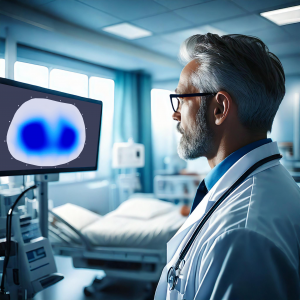
Monitoring Lung Function with EIT Technology During Mechanical Ventilation
Discover how the EIT LUNG Kit can enhance lung function monitoring during mechanical ventilation. 22 – 26 April 2024 @Lorentz Center, Leiden, NL
Get in touch with us

+49 3425 88399 00

info@sciospec.de

Sciospec Scientific Instruments GmbH
Leipziger Str. 43b, 04828 Bennewitz, Germany
